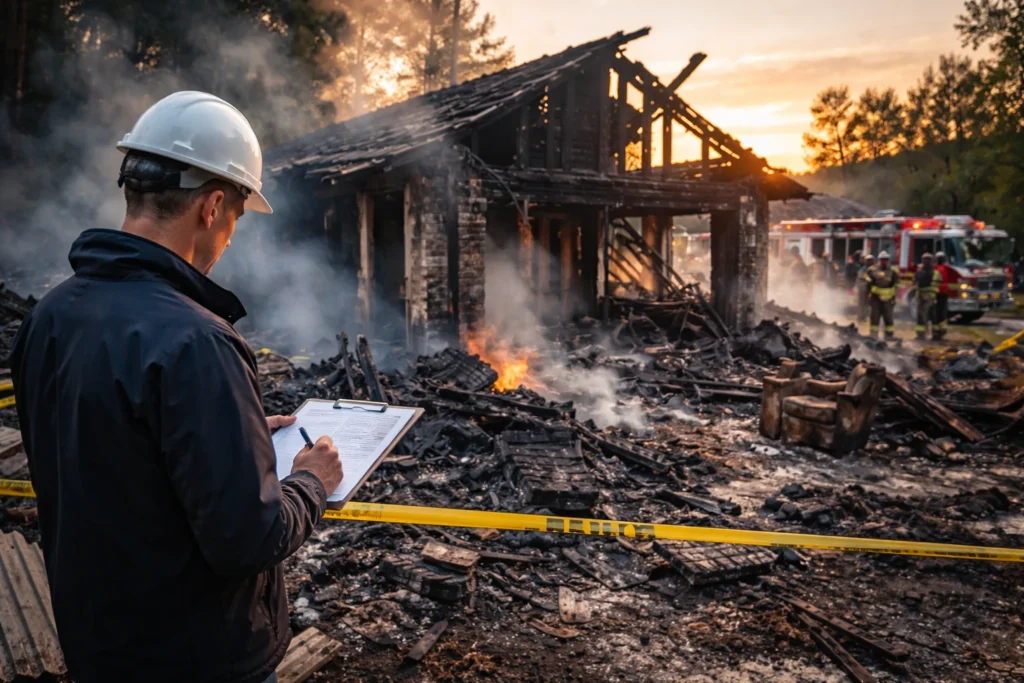
A house fire changes everything in minutes. Walls blacken. Rooflines weaken. The smell of smoke lingers long after the flames are gone. And while you’re still trying to process what happened, the insurance claim clock is already ticking. This is where a fire insurance public adjuster becomes critical — not as a luxury, but as a strategic ally.
When the damage is severe, the paperwork is complex, and the settlement determines how quickly you rebuild your life or business, experience matters. Representation matters. Advocacy matters.
Let’s break down exactly why.
What Is a Fire Insurance Public Adjuster?
A fire insurance public adjuster is a licensed professional who represents you, the policyholder, during a fire-related insurance claim. Not the insurance company. Not the carrier’s bottom line. You.
Insurance companies send their own adjusters to evaluate your loss. That’s expected. But those adjusters work for the insurer. Their responsibility is to assess the claim within company guidelines.
A fire insurance public adjuster works differently. They:
- Interpret your policy in your favor where applicable
- Document every category of damage
- Prepare detailed estimates
- Negotiate for the highest justified settlement
They are regulated by state licensing authorities and must follow strict professional standards. In short, they level the playing field.
The True Impact of Fire Damage
Most people think of fire damage as what burned. That’s only the beginning.
Structural Damage
Heat weakens framing. Steel warps. Foundations crack from extreme temperature shifts. Roof systems often suffer hidden compromise. What looks stable today may fail months later if improperly assessed.
A fire insurance public adjuster works with contractors and engineers when needed to ensure structural damage is fully documented — not minimized.
Smoke and Soot Damage
Smoke is invasive. It moves through ductwork, settles into insulation, and corrodes wiring and appliances. Soot is acidic. It damages surfaces long after the fire is extinguished.
Incomplete smoke remediation can lead to:
- Persistent odor
- Electrical failures
- Premature appliance breakdown
Thorough documentation matters here.
Water Damage From Fire Suppression
Thousands of gallons of water may have been used to put out the fire. That water doesn’t simply disappear. It seeps into drywall, flooring, and substructures.
Left untreated, it can cause:
- Mold growth
- Rot
- Secondary structural deterioration
Your claim must reflect this.
Personal Property Loss
Inventorying personal property after a fire is emotionally exhausting. Furniture. Clothing. Electronics. Business inventory. Tools. Files.
And here’s the truth: insurance companies often rely on your documentation. If it’s incomplete, your payout may be incomplete.
A fire insurance public adjuster builds a comprehensive personal property inventory that accounts for quantity, quality, and replacement cost.
Why Fire Insurance Claims Are Often Underpaid
Let’s be direct. Fire claims are complex. Complexity creates opportunity for oversight.
Common reasons claims are underpaid include:
- Depreciation disputes
- Disagreement over scope of repairs
- Incomplete property inventories
- Code upgrade exclusions
- Overlooked smoke damage
Insurance policies are contracts. Detailed contracts. And unless you review them carefully, you may not know what coverage extensions exist or what endorsements apply.
A fire insurance public adjuster reads your policy line by line. They identify:
- Replacement cost provisions
- Additional Living Expense (ALE) coverage
- Ordinance and law coverage
- Debris removal limits
Those details change settlement outcomes.
What a Fire Insurance Public Adjuster Actually Does
Let’s move from theory to action.
1. Immediate Response
After the fire, speed matters. Evidence fades. Damage spreads.
Your adjuster will:
- Inspect the property
- Photograph and video record all damage
- Coordinate with mitigation companies
- Ensure nothing is prematurely discarded
Documentation at this stage protects your claim later.
2. Policy Review
Not all fire coverage is identical. Some policies pay replacement cost. Others pay actual cash value unless repairs are completed.
Your fire insurance public adjuster identifies:
- Coverage limits
- Sub-limits
- Deductibles
- Endorsements
Clarity early prevents surprises later.
3. Comprehensive Damage Documentation
This is where claims are won or lost.
Professional estimators often use advanced software to generate repair scopes. Contractors may provide independent bids. Engineers may weigh in on structural stability.
Everything is compiled into a structured claim package.
4. Negotiation
Negotiation is not confrontation. It’s structured discussion backed by documentation.
If an insurer’s estimate omits items or undervalues repairs, your fire insurance public adjuster presents evidence. They request re-inspections when necessary. They push for justified supplements.
And they keep the process moving.
5. Settlement Review and Supplements
Initial settlements are rarely final in complex fire losses.
Hidden damage appears during demolition. Code upgrades become mandatory. Prices fluctuate.
A public adjuster manages supplements so you’re not absorbing unexpected costs.
Fire Insurance Public Adjuster vs. Insurance Company Adjuster
Understanding representation is essential.
| Feature | Fire Insurance Public Adjuster | Insurance Company Adjuster |
| Represents | Policyholder | Insurance company |
| Payment | Percentage of settlement | Salary from insurer |
| Objective | Maximize covered payout | Control claim cost |
| Policy Interpretation | In your interest | Company interpretation |
| Negotiation | Advocate for you | Company representative |
This distinction alone explains why many property owners choose representation.
When Should You Hire a Fire Insurance Public Adjuster?
Timing matters.
You should strongly consider hiring one when:
- The fire damage is extensive
- The property is a business
- There is structural compromise
- The insurer disputes coverage
- The initial offer feels insufficient
- You simply don’t have time to manage the claim
The earlier a fire insurance public adjuster becomes involved, the more control they have over documentation and direction.
Waiting too long can limit options.
Is Hiring One Worth the Cost?
Public adjusters typically work on a contingency fee. That means they are paid a percentage of the final settlement.
Let’s look at this practically.
| Scenario | Without Adjuster | With Adjuster |
| Initial Offer | $180,000 | $180,000 |
| Supplemental Damages Identified | $0 | $65,000 |
| Final Settlement | $180,000 | $245,000 |
| Fee (10%) | N/A | $24,500 |
| Net to Policyholder | $180,000 | $220,500 |
Every case differs. But thorough documentation frequently uncovers overlooked losses.
It’s not about inflating claims. It’s about ensuring full recovery under the policy terms.
Special Considerations for Business Owners
Commercial fire claims are a different level of complexity.
They may include:
- Business interruption
- Extra expense coverage
- Inventory valuation
- Equipment replacement
- Loss of income calculations
Calculating lost income requires historical financial data. Seasonality analysis. Fixed expense review.
If business interruption is mishandled, recovery stalls.
A fire insurance public adjuster experienced in commercial claims can:
- Compile profit and loss statements
- Work with accountants
- Project lost revenue accurately
Time is money. Literally.
Common Mistakes After a Fire
Stress clouds judgment. That’s understandable.
But avoid these mistakes:
- Accepting the first offer without review
- Throwing away damaged items before documentation
- Forgetting about smoke-only affected areas
- Missing deadlines
- Relying on verbal assurances
Insurance conversations should be documented. Estimates should be reviewed. Questions should be asked.
You get one opportunity to present your claim correctly.
The Fire Claim Process: Step by Step
- Emergency mitigation
- Notify insurer
- Initial inspection
- Damage documentation
- Estimate preparation
- Negotiation phase
- Settlement agreement
- Supplemental claims if necessary
Each step requires attention. Missing details in early stages echo later.
How to Choose the Right Fire Insurance Public Adjuster
Not all adjusters specialize in fire losses.
Look for:
- Valid state licensing
- Specific experience with fire claims
- Transparent fee agreements
- Clear communication
- Strong documentation processes
Ask direct questions:
- How many fire claims have you handled?
- Do you attend insurer inspections?
- How do you calculate personal property values?
- What is your supplement strategy?
Professional answers signal professional capability.
The Emotional and Financial Reality
Fire losses are not just financial events. They are deeply personal. Homes represent security. Businesses represent livelihoods.
When you’re dealing with displacement, temporary housing, contractor coordination, and family stress, managing a complex insurance negotiation alone can be overwhelming.
A fire insurance public adjuster removes that burden.
They focus on:
- The numbers
- The documentation
- The negotiations
So you can focus on rebuilding.
Final Thoughts: Protecting Your Recovery
Fire claims are high-stakes events. The outcome shapes your recovery timeline and financial stability for years.
Handling everything alone is possible. But possible doesn’t always mean optimal.
A qualified fire insurance public adjuster brings structure to chaos. They bring documentation to emotion. They bring negotiation strength where it matters most.
If the loss is small, you may manage it independently. But when the damage is significant, the policy language is dense, and the settlement determines whether you fully recover or fall short, representation becomes a strategic decision.
Not reactive. Strategic.
Rebuilding after a fire is hard enough. Your insurance claim shouldn’t make it harder.
And that’s exactly why so many property owners turn to a fire insurance public adjuster when it matters most.